DanielleRiggio

Danielle Riggio Blog
 RSS Feed
Subscribe and receive email notifications of new blog posts.
RSS Feed
- 2026 | 28 Posts
- 2025 | 48 Posts
- 2024 | 47 Posts
- 2023 | 48 Posts
- 2022 | 48 Posts
- 2021 | 26 Posts
- 2020 | 53 Posts
- 2019 | 55 Posts
- 2018 | 27 Posts
Agent Promotion | 1 Posts
Agent Spotlight | 1 Posts
Awards | 1 Posts
Buy a Home | 1 Posts
Laffey Knows | 353 Posts
Laffey Real Estate | 1 Posts
Outside the Box | 22 Posts
March
27
27
Pros and Cons of Adding a Water Feature
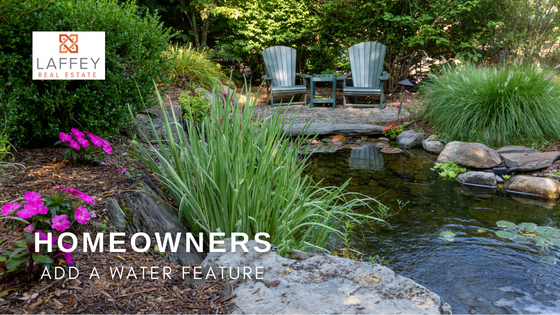
A water feature is a lovely way to upgrade your property, but only if you do it right. Water features—anything from a pond, a fountain or waterfall, or even a bird bath with a solar pump—can provide a relaxing, meditative space—or can be a worry if it's located in the wrong place and doesn't fit your property.
Your budget will determine project size, as will the amount of space you have. Here's the good and the not-so-great about water features, as compiled by our real estate agents.
- Determine why you want a water feature.
Water is mesmerizing, no doubt about it. That's why so many of us pay good money to visit or live near the water, be it a lake or seaside. But narrowed down to a backyard water feature, what do you want? A pond for the kids to put their toes in during the summer? A soothing waterfall or fountain where you can relax and meditate? A protected area to nurture fish and host birds? Consider the possibilities, as well as how much space and money you have. - Do you have the right place for a water feature, and will the local government allow it?
Think about the scale of the project. For instance, a pond may not be the best choice if you have a small yard. Far better, perhaps, to choose a solar-powered stone or ceramic fountain. You will also need to check zoning in your neighborhood: Do local regulations allow you to install a pond, or for that matter, a fountain or waterfall? How will draining your pond or other type of water feature affect your home or your neighbor's property? You may need to find the answers to these questions before you get a permit. - Think about the implications of where you locate the water feature.
You may have to alter the topography so that the water drains properly. Also, do you want the water feature near the house so that you can see or hear it? If you want a waterfall to help drown out neighborhood noise, the project should be close to the house—but make sure that proximity doesn't create problems. - Consider the impact of sunlight—or not enough of it.
When deciding on your location, note how the sunlight will reach any plants you plant around the pond, waterfall, birdbath, or fountain. For instance, water lilies need at least six hours of sunlight daily to thrive. And be mindful that if you install a solar fountain, it needs sunlight to work. But sunlight can encourage algae growth, so you'll have to clean the water feature more frequently if you place it in direct sunlight without aeration. - Plan for maintenance.
Any water feature is certain to require maintenance at times. Among the tasks you will have to perform: cleaning and draining regularly; checking water levels; removing debris; winterizing, including draining the water and bringing in features that freeze, such as pumps; controlling algae, either by cleaning or adding vinegar. If you have fish, such as plecos and Siamese algae eaters, they will help control algae, as long as it's not excessive. Fish need a pond at least 2 feet deep or more to survive over winter.
We can help you find the perfect Long Island home for a water feature. Contact us today.

Privacy Policy / DMCA Notice / ADA Accessibility


This site is hosted, designed and copyright
© 1994 - 2026 by
Delta Media Group, Inc. -- Patent Pending --